


Can Your Toothbrush Really Help Heal a Mouth Ulcer?

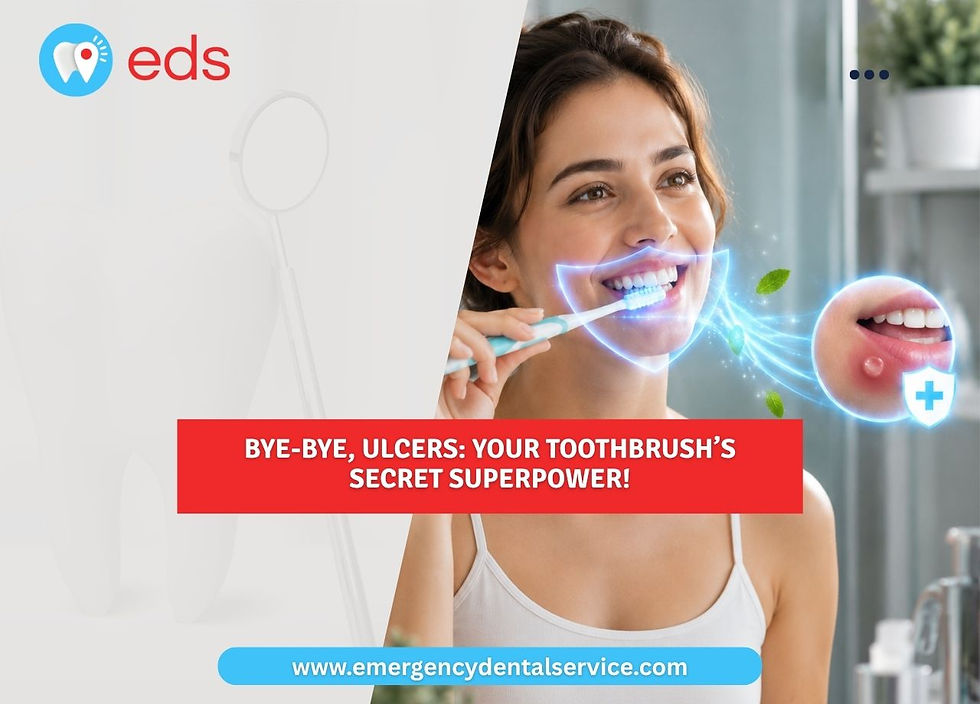
A canker sore shows up at the worst possible time — right before a big meal, mid-conversation, or the morning you least feel like dealing with mouth pain. Because these little ulcers usually clear up on their own, a lot of people either ignore them or reach for whatever remedy is closest at hand.
One factor that gets overlooked more than it should is oral hygiene. Keeping your mouth clean cuts down on the plaque, food debris, and bacteria hanging around an ulcer. But there's a distinction worth making here: brushing well can support healing and keep things from getting worse — it isn't a cure, and it was never going to be one.
Knowing the difference is what keeps you from treating an ulcer the wrong way.
What Is a Mouth Ulcer, Exactly?
A mouth ulcer is just a small break in the soft tissue lining your mouth. The most common version is an aphthous ulcer — what most people just call a canker sore. They tend to show up on the softer, non-keratinized tissue: the inside of your lips or cheeks, under the tongue, that kind of area.
They usually look like small, shallow, round or oval sores with a pale or yellowish middle and a red ring around the edge. They can hurt more than their size suggests, but they aren't the same thing as a cold sore, which comes from a herpes virus.
What causes them varies. Biting your cheek, stress, certain nutritional gaps, hormonal shifts, and a handful of systemic conditions can all play a role. Sometimes there's no obvious trigger at all.
That uncertainty is exactly why ulcers that keep coming back, or ones that just won't heal on a normal timeline, deserve an actual dental evaluation instead of another round of home remedies.
So Where Does Your Toothbrush Fit In?
Your toothbrush isn't going to make a sore vanish. Its real value is in plaque control, which keeps the whole environment in your mouth healthier while that tissue heals.
Plaque is a bacterial film that builds up on your teeth and along the gumline. Left alone, it contributes to gingivitis, decay, and a handful of other problems — and it also adds more bacteria and debris around tissue that's already irritated. Brushing well keeps that buildup in check.
What it shouldn't do is scrub directly over the sore. Mechanical irritation from an aggressive brushing habit can make an ulcer more painful and slow down healing rather than speed it up.
The goal, then, isn't more brushing or less brushing — it's clean teeth without repeatedly hitting the sore.
Should You Stop Brushing Altogether?
Generally, no.
Skipping brushing to protect an ulcer just lets plaque build up, which doesn't help anything. The better move is adjusting your technique for a few days, not abandoning it.
Switch to a soft-bristled brush and go gently. Steer clear of directly scraping the sore itself, but keep cleaning the teeth and gumline around it as normal.
If the same spot keeps catching on your brush, a bracket, a rough tooth edge, or a dental restoration, that's worth fixing at the source rather than working around it indefinitely.
Why a Soft Brush Actually Matters
Hard bristles combined with heavy pressure can traumatize the soft tissue in your mouth, and that's obviously worse when there's already a sore in there.
A soft brush cleans just as effectively with a lot less mechanical stress on your gums and cheeks. This isn't only an ulcer-specific rule, either — more pressure has never equaled more cleaning, ulcer or no ulcer.
Plaque comes off with the right technique and consistent brushing, not with force.
Don't Mix Up Cleaning With Treatment
This is where a lot of home-remedy advice online starts to go sideways.
Brushing and flossing support a healthy mouth, but they don't treat whatever's actually causing a recurring or persistent ulcer. Depending on what's going on, a dentist might recommend something more targeted to bring down pain and inflammation.
For a standard, one-off canker sore, the plan is usually simple: keep the area clean, avoid irritating it further, and let it heal. Spicy, acidic, or rough-textured foods tend to make things worse while a sore is active, so it's worth avoiding them for a few days.
And if a sore keeps showing up in the same place because of a sharp tooth, a broken filling, a denture edge, or an orthodontic wire, fixing that source of irritation matters more than swapping toothpaste brands.
When a Mouth Ulcer Is More Than Just a Canker Sore
Most canker sores clear up without any real intervention. But not every sore in your mouth is an ordinary one, and it's worth getting it checked out when it:
• Sticks around longer than a normal ulcer should
• Keeps coming back or shows up unusually often
• Is noticeably larger or more painful than a typical sore
• Makes it hard to eat or drink
• Comes with fever, real swelling, or other symptoms that feel off
• Developed after ongoing irritation from a tooth, appliance, or restoration
A sore that won't quit shouldn't just get covered up with mouthwash and ignored because the pain level seems manageable.
Could a Mouth Ulcer Turn Into a Dental Emergency?
A typical small canker sore isn't a dental emergency. That said, more severe mouth symptoms can sometimes get mistaken for a routine ulcer when they're actually something else.
Significant facial or oral swelling, trouble breathing or swallowing, bleeding you can't get to stop, or pain that's rapidly getting worse — those aren't things to wait out. If you're dealing with symptoms like that, treat it as a dental emergency and get evaluated right away rather than assuming it's just a sore that will pass.
Uncontrolled oral bleeding or injury to the soft tissue in your mouth also falls into that category — both are worth an urgent look rather than a wait-and-see approach.
The Smartest Way to Brush While You Have an Ulcer
Treat your toothbrush as a way to keep the environment around the sore clean, not as something meant to treat the sore directly.
Keep brushing twice a day with a soft brush, use light pressure, and work around the ulcer instead of over it. Keep cleaning between your teeth as best you comfortably can. If brushing becomes genuinely painful, that's a reason to call a dentist, not a reason to stop altogether.
The idea is straightforward: keep the mouth clean and give the tissue room to heal.
The Takeaway
Your toothbrush does have a role to play here, just not the one the headline promises. It keeps plaque under control and supports a healthier mouth while an ulcer heals on its own timeline — it was never going to cure anything by itself.
Brush gently, don't scrub over the sore, and don't assume every stubborn ulcer is harmless. Most will clear up in a week or two without much fuss. But when a sore won't heal, keeps returning, or shows up with swelling, fever, or other symptoms that don't add up, getting it checked out is the safer move — and the only way to tell an ordinary canker sore apart from something that actually needs treatment.
Dealing With Something More Than a Canker Sore?
If your symptoms go beyond a routine mouth ulcer — swelling, uncontrolled bleeding, or pain that's getting worse fast — find a 24/7 emergency dentist near you or call Emergency Dental Service now at 1-888-350-1340 to get connected with a local provider today.
Frequently Asked Questions
Can brushing your teeth cure a mouth ulcer?
No. Brushing supports a cleaner mouth while the ulcer heals on its own, but it doesn't treat the underlying cause and won't speed healing on its own.
Should I avoid brushing near an ulcer completely?
Not entirely. Use a soft brush and gentle pressure, clean around the sore rather than directly over it, and keep brushing the rest of your teeth normally.
Why do some mouth ulcers keep coming back?
Recurring ulcers can be linked to stress, nutritional deficiencies, hormonal changes, or ongoing irritation from a sharp tooth or dental appliance. A dentist can help figure out which applies to you.
When should I see a dentist about a mouth ulcer?
If it lasts longer than about two weeks, keeps recurring, is unusually large or painful, or comes with fever or significant swelling, it's time for a professional evaluation rather than more home care.
Is a mouth ulcer ever a dental emergency?
A typical canker sore isn't. But severe swelling, trouble breathing or swallowing, uncontrolled bleeding, or rapidly worsening pain need urgent attention, even if they started out looking like a simple sore.


Comments